|
THE PLANETARY ELECTRIC CIRCUIT
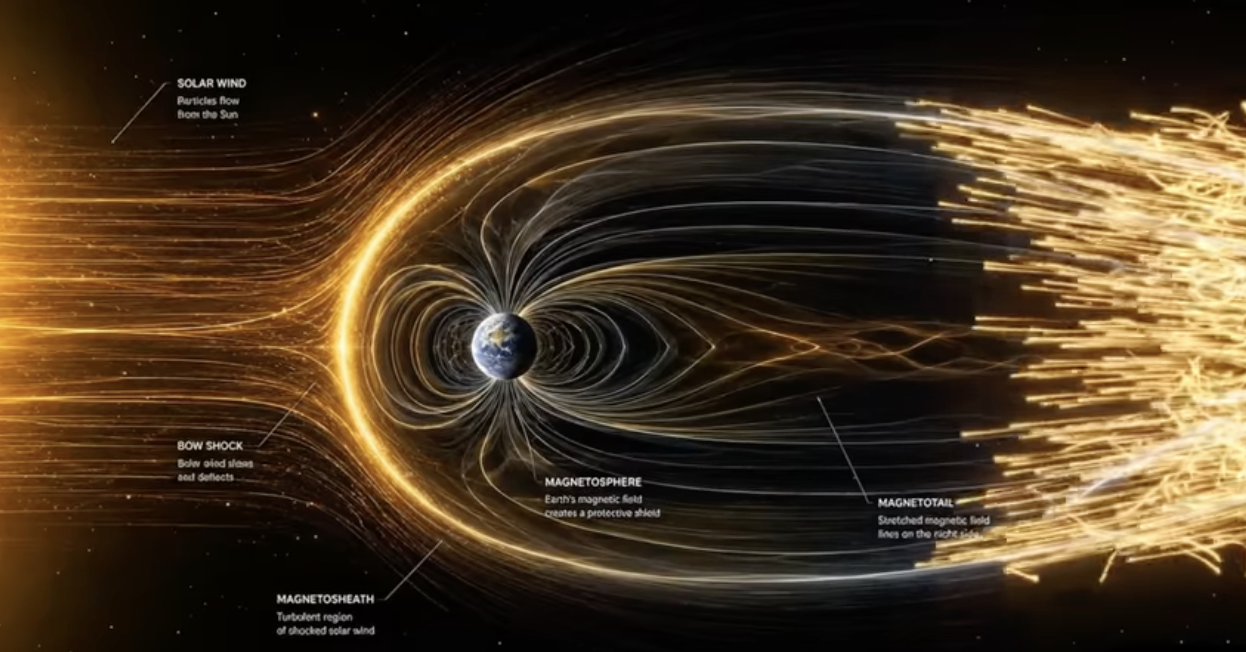
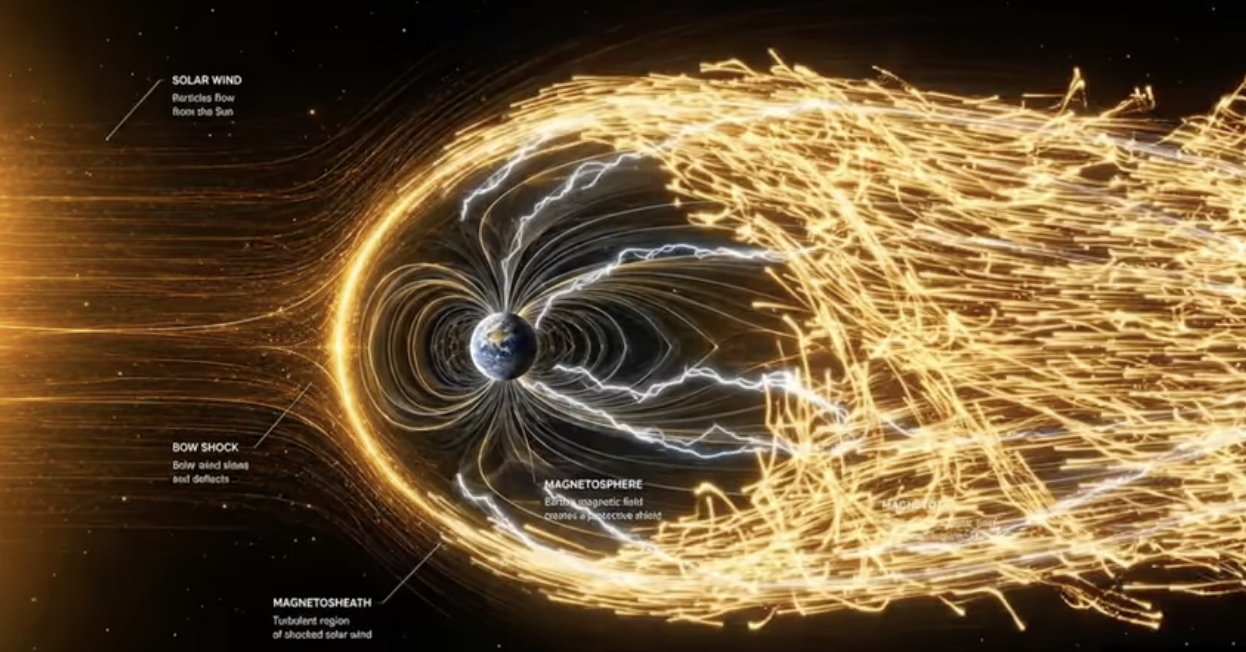
When a CME intersects the planetary field electrified field lines drape outer planetary field lines, grounded in the atmosphere inside the auroral ovals, inducing a voltage potential powering sheet currents of electrons into the auroral ovals inducing Auroras and electrifying sectors of the ovals facing the night sky during geomagnetic storms.
The repelling force between electrons, charging sectors of the ovals after geomagnetic storms, powers expansion of the electrified air mass away from the poles which increases barometric pressure, wind speed and extreme weather along the interface with the ambient mid latitude air mass, moving from west to east around the equatorial plane.
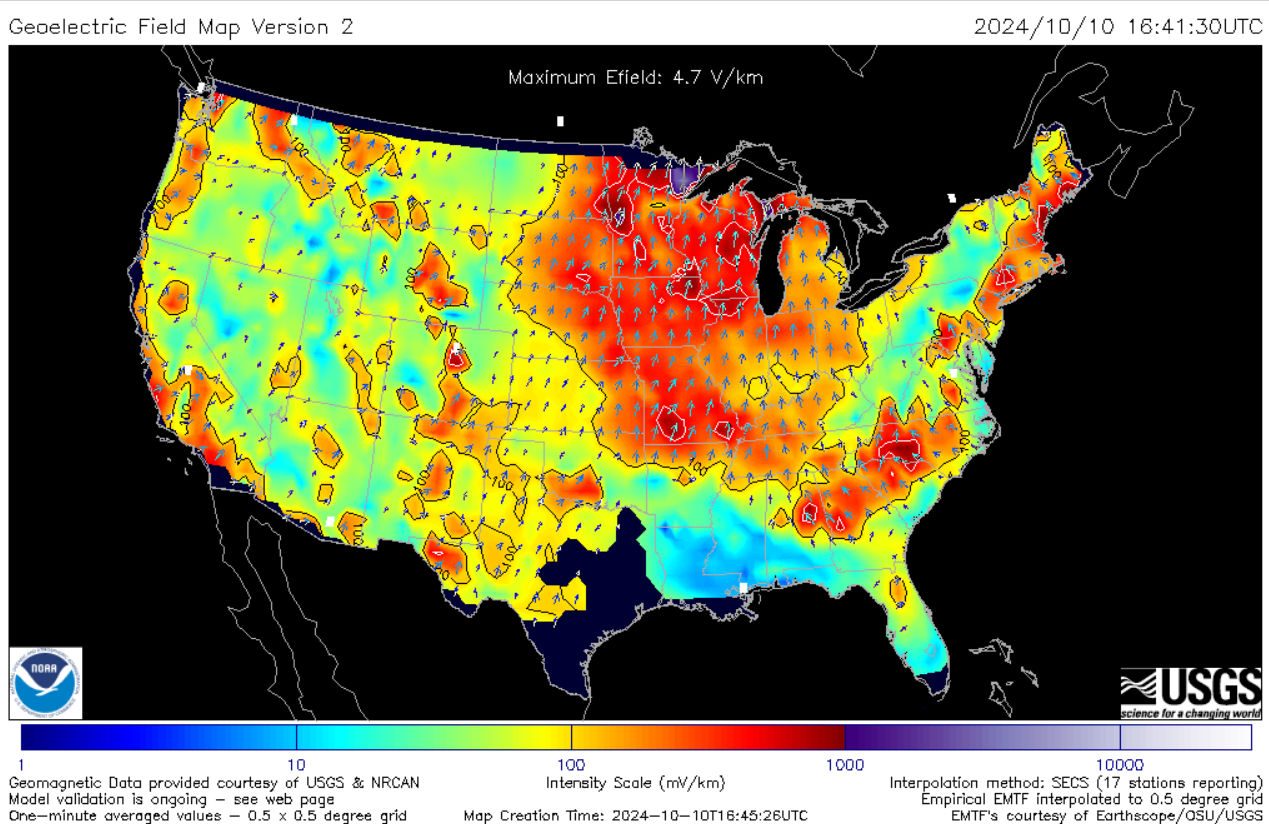
SolarCycle 24: 2013 x 2014 x 2015 x 2016 x 2017 October 8, 2024 – POWERFUL X-CLASS SOLAR FLARE AND CME: Sunspot AR3848 was directly facing Earth this morning, when it unleashed a powerful X1.8-class solar flare. NASA’s Solar Dynamics Observatory recorded the extreme ultraviolet flash: October 10, 2024 – A SOLAR STORM JUST HIT EARTH: The CME launched by Tuesday’s X-flare hit Earth today, and it appears to be as potent as advertised. Geomagnetic storms are underway with intensities fluctuating between G2 (Moderate) and G4-class (Severe). If it is dark where you are, be alert for auroras! Aurora alerts: SMS Text Update: Auroras have been observed in Virginia, Washington DC, France, Denmark, Australia, Switzerland, Germany, Italy, Hungary, England, and Scotland. And India!! ELECTRIC CURRENTS ARE FLOWING THROUGH THE GROUND: Electrical currents are flowing through rocks and soil in the United States in response to today’s geomagnetic storm. Red zones in this map from NOAA show where the geoelectric voltages are highest:
The map, above, is a snapshot from a real-time display that takes into account the 3D conductivity of the Earth and ongoing geomagnetic activity. A computer at NOAA’s Space Weather Prediction Center crunches the data to produce minute-by-minute estimates of electricity in the ground. May 13, 2013 -SUNSPOT AR1748 PRODUCED an X1.7-class flare, an X2.8-class flare (1609 UT on May 13), an X3.2-class flare (0117 UT on May 14), an X1-class flare (0152 on May 15) and M3 Class flare and geo-effective CME on May 17. These are the strongest flares of the year, signalling a significant increase in solar activity. May 18 -19, 2013 – A PAIR OF CME’s HIT EARTH. resulting storms sparked Northern Lights visible as far south as Colorado. Some of the brightest appeared over Cape Cod, Massachusetts. May 20, 2013 – TORNADOES KILL 24 & INJURE 212 when an EF5 tornado ravaged Moore, Oklahoma, and adacent areas, with peak winds at 210 miles per hour, part of a larger system which produced several other tornadoes across the Great Plains over the previous two days, including five that struck portions of Central Oklahoma on May 19.
|
Atoms are Electrons and Positrons