|
THE DEEPWATER OCEANS The planetary field captures electrons from the solar wind and electrified weather systems charge the deepwater oceans inducing which induces a voltage potential between the oceans and core where electrons transform into field lines and photons induced by mantle heating transform into protons. Protons and electrons transform, in exothermic reactions, into elements which increase mantle mass and planetary surface area as magma upwells and forms new oceanic lithosphere between the spreading oceanic plates.
Seawater in hydrothermal vents may reach temperatures of over 700° Fahrenheit. Hot seawater in hydrothermal vents does not boil because of the extreme pressure at the depths where the vents are formed.
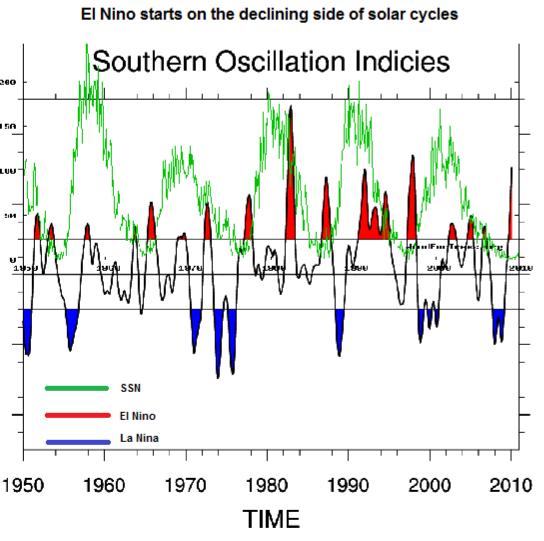
The water and gas fraction of magma plumes upwelling under the ocean basins is discharged from hydrothermal vents which fill and fertilize the oceans. The current through the discharge is powered by the voltage potential across the lithosphere which increases during the solar maximum when more frequent storms electrify the oceans. The increase in voltage potential increases electrical resistance and heating of the discharge during the solar maximum. A new study shows a correlation between solar cycles and a switch from El Nino to La Nina conditions in the Pacific Ocean. They found all 5 terminator events studied coincided with a flip from an El Nino to a La Nina. They found only a 1 in 5,000 chance all five events would randomly coincide with the flip in ocean temperatures.
|
Atoms are Electrons and Positrons