|
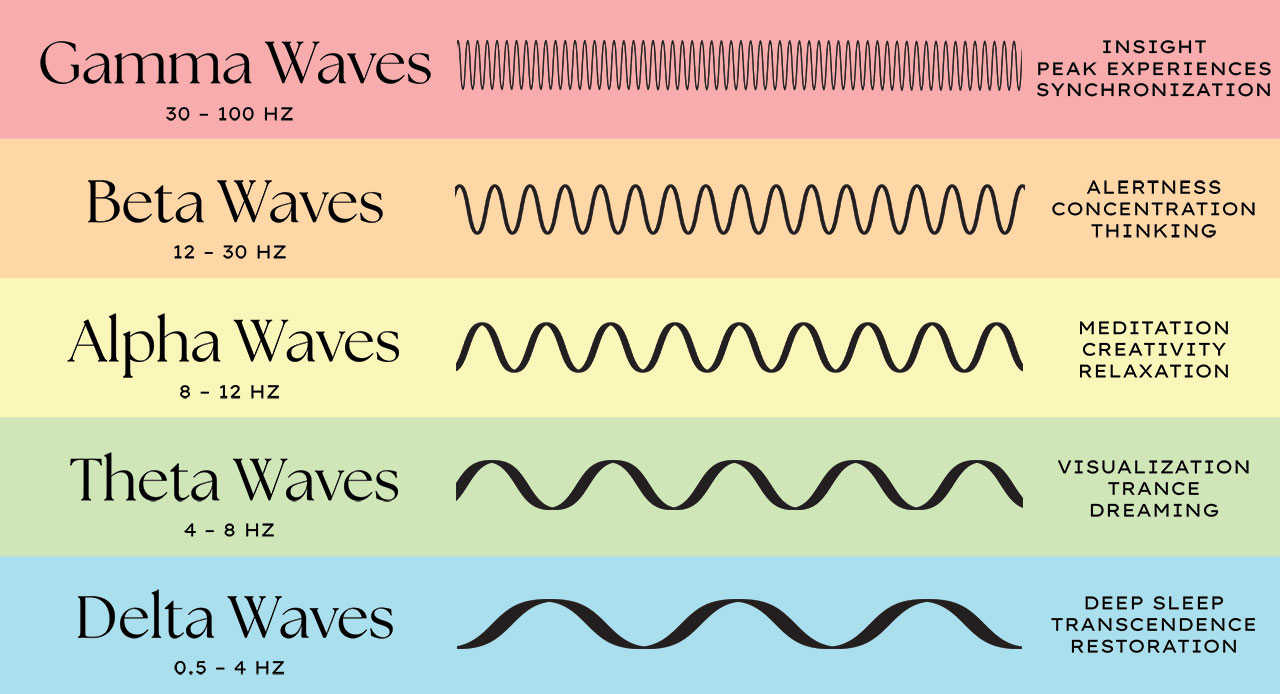
THE LIFEFORCE Alpha waves in the human brain are between 6 and 8 hertz. The wave frequency of the human cavity resonates between 6 and 8 hertz. All biological systems operate in the same frequency range. The human brain’s alpha waves function in this range and the electrical resonance of the earth is between 6 and 8 hertz. Thus, our entire biological system, the brain and the earth itself, work on the same frequencies – Nikola Tesla In 1954 and 1960 Koenig and his colleagues described the remarkable similarities of spectral power density profiles and patterns between the earth-ionosphere resonance and human brain activity which also share magnitudes for both electric field and magnetic field components. In 2006 Pobachenko and colleagues reported real time coherence between variations in the Schumann and brain activity spectra within the 6-16 Hz band.. The Schumann Resonance is Earth’s natural electromagnetic “heartbeat”. This low-frequency (ELF) vibration is believed to affect our bodies in a few key ways. The 7.83 Hz frequency closely matches human alpha and theta brainwaves.
Studies have identified neurological health benefits from exposing human volunteers or animal models to light, sound or tactile stimulation at the brain’s “gamma” frequency rhythm of 40Hz. In the latest such research at The Picower Institute for Learning and Memory and Alana Down Syndrome Center at MIT, scientists found that 40Hz sensory stimulation improved cognition and circuit connectivity and encouraged the growth of new neurons in mice genetically engineered to model Down syndrome. Neurobiological studies show that the resonance frequency of the hippocampus is 7,83 Hz. NASA was interested in the earth’s “heartbeat” from early on. Professor Persinger and other reputable professors such as Dr. Ludwig declared and considered this frequency as “biological norm”. Astronauts who left the ionosphere and re-entered earth suffered from strong physiological conflicts [16]. Persinger recognized the problem and fixed it. He designed little generators, which transmitted the Schumann Resonances, for astronauts to carry with them and protect them. – Open Access Journal ***************** The temporal sensitivity and resolution of human vision varies depending on the type and characteristics of visual stimulus, and differs between individuals. The human visual system can process 10 to 12 images per second and perceive them individually, while higher rates are perceived as motion.[1]. ***************** Scientists from EPFL and the universities of Ulm and Zurich, now put forward a new model of how the brain processes unconscious information, suggesting consciousness arises only in intervals up to 400 milliseconds, with no consciousness in between. ***************** That visual cue triggers a series of reflexes sending neural signals to the dragonfly’s four wings, which are driven by a set of direct muscles modulating the left-wing and right-wing pitch asymmetry accordingly. With 3 or 4 wing strokes a tumbling dragonfly can roll 180 degrees and resume flying right-side up. The entire process takes about 200 milliseconds.
|
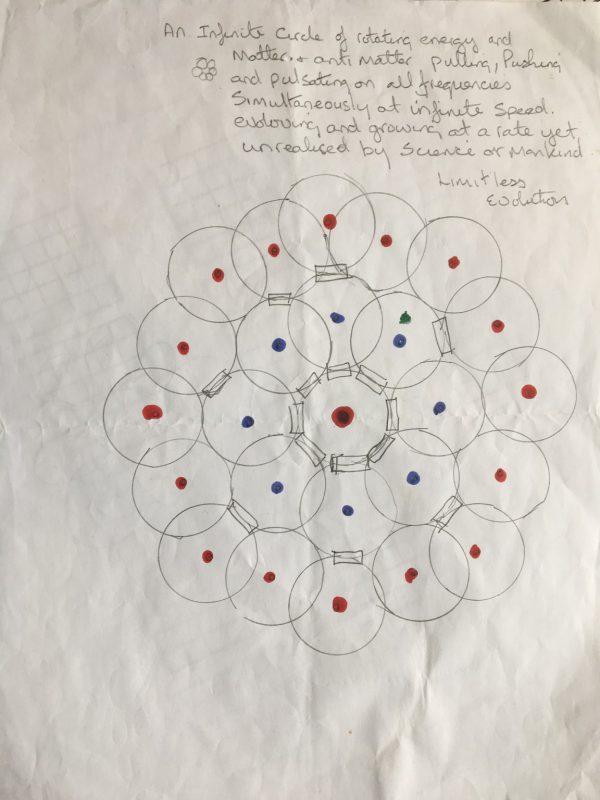
Atoms are Electrons and Positrons